
Structured Thinking Software for business
Most of what decides the outcome is settled before the work starts
By the time work becomes tasks and deadlines, many of the decisions that determine the result have already been made.
- The missing stakeholder does not complain.
- The assumption nobody noticed does not label itself.
- The alternative nobody generated cannot lose the comparison.
- The dependency nobody thought of does not turn red on the plan.
You cannot fix what you have not seen yet.
MindGenius gives the thinking somewhere visible to organise, challenge and agree before it becomes work.
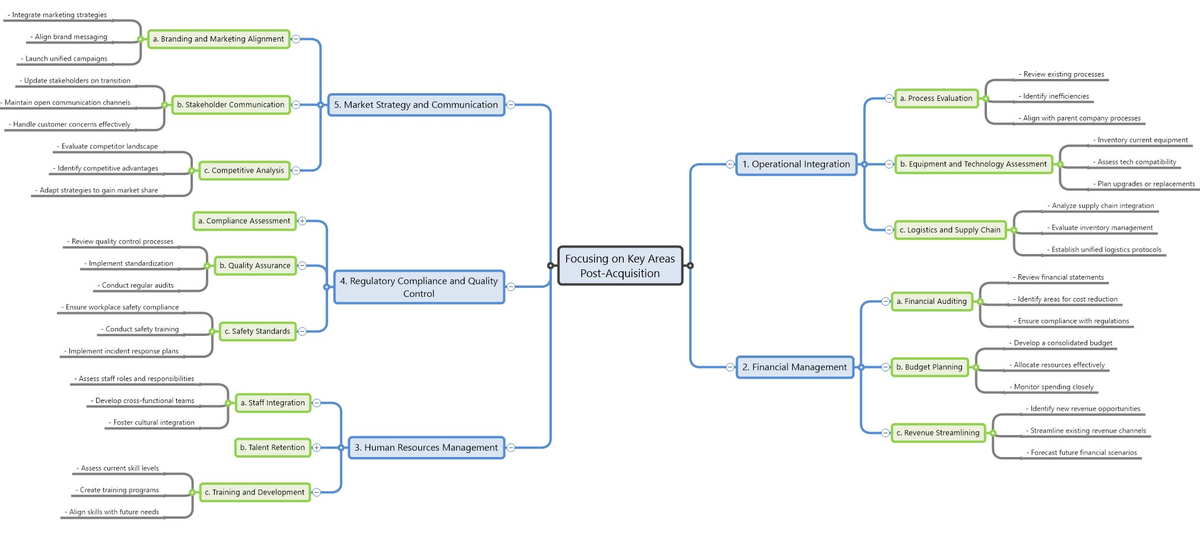
A real working map, one decision broken into the things that actually determine the outcome.
Structured Thinking in practice
More than a sequence of stages
The five stages tell you where the thinking has reached. Different perspectives change how you look at it. A small number of rules stop the stages being followed mechanically. And the shape of the map can point you towards another question worth asking.
Explore the Structured Thinking Handbook →
- 01CaptureWhat do we know?
- 02UnderstandWhat does it mean?
- 03DecideWhat should we do?
- 04CommitWhat are we agreeing to?
- 05Define SuccessHow will we know this worked?
Here is what those five stages look like in practice.
01 · Capture
Get the situation into view before deciding what it means.
Start with the question, problem or opportunity and capture facts, observations, assumptions, worries, constraints and open questions. A flat list, deliberately, because premature categories can reproduce what you expected to find.
Keep assumptions labelled as assumptions. An assumption is fine, an unlabelled one is not. And write down what you do not know rather than filling the gap with something plausible.
02 · Understand
Turn what you have captured into something you can make sense of.
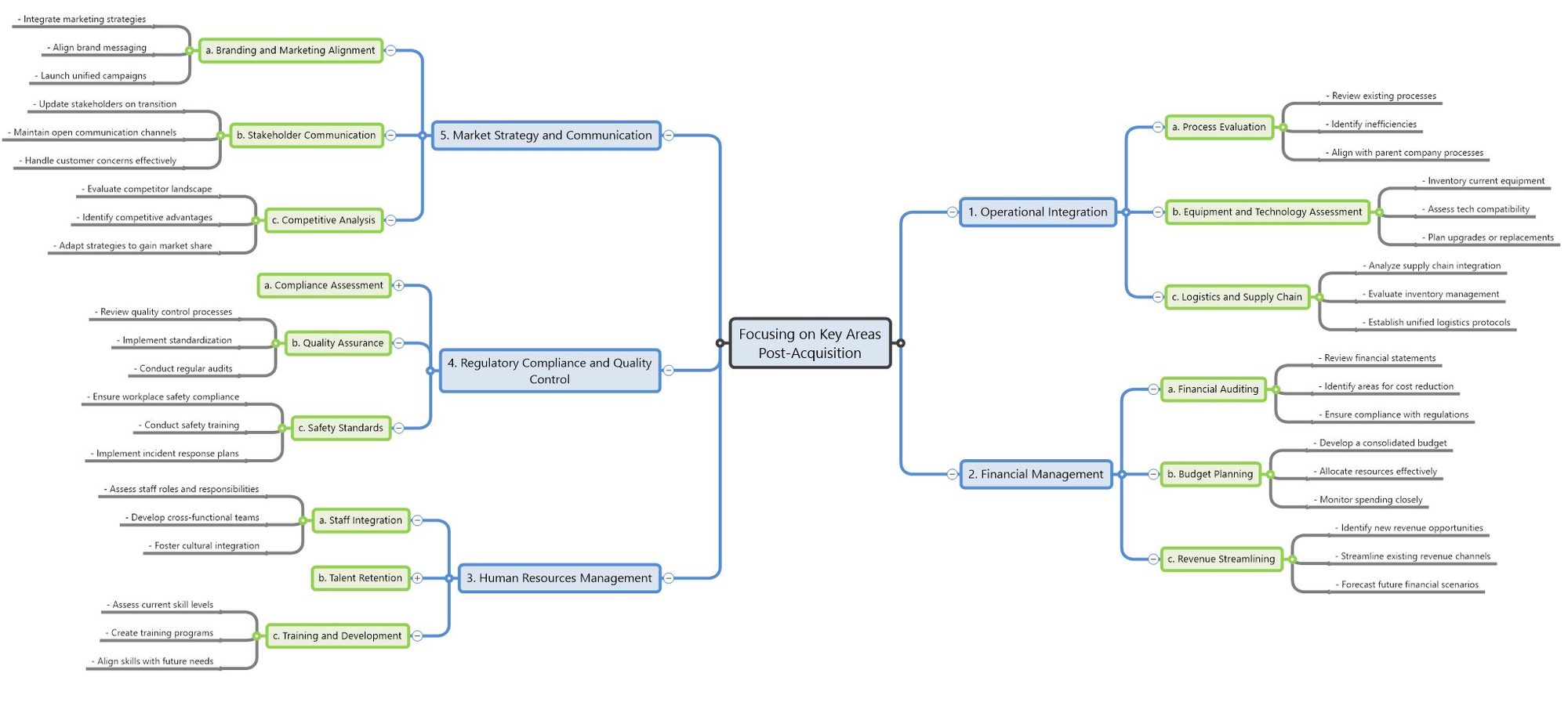
Group related ideas and reorganise the flat list into a hierarchy. Structure starts to expose relationships, contradictions, underlying causes and gaps that a flat list cannot show, such as separate problems clustering around one cause.
Then look at where the map has not grown. A thin branch beside several well developed ones does not prove anything is wrong. Perhaps the subject is genuinely simple, perhaps it has not been thought through yet. Either way the comparison is on the map, so the question can be asked of the map rather than of a colleague.
03 · Decide
Choose with the alternatives still in front of you.
The first plausible answer can gain an advantage simply because it arrived first. Keep other ways of meeting the need visible long enough to compare and improve them, and understand what each gains, gives up and assumes.
Sometimes both sides matter: speed and quality, autonomy and consistency. The question is then how to advance one without needlessly damaging the other.
Apply categories such as Impact and Effort and Pivot the whole map around them. The same thinking can be regrouped to bring combinations such as high impact and low effort into view, without deleting, duplicating or rebuilding the underlying material.
Before anyone signs off, challenge the answer once more
A preferred way forward may now be clear. Before turning it into a commitment, deliberately interrupt the flow and ask:
These are not another stage. Neither question has to uncover something new, and silence is not a failure. If either changes the picture, go back before signing off.
Challenge is not verification. These questions can reopen the thinking. They do not verify factual claims already written down, so those still need checking separately.
04 · Commit
Agree the plan with the person the work is for, and put the organisation behind it.
Decide chose the answer. Commit agrees the outcome. Agree the intended result outward, with the person the work is for, then inward: an owner with the authority and resources to deliver, not just a name on the task. Then the trade-off. If this really matters, what are we stopping or delaying to make room? Twenty top priorities are no priorities.
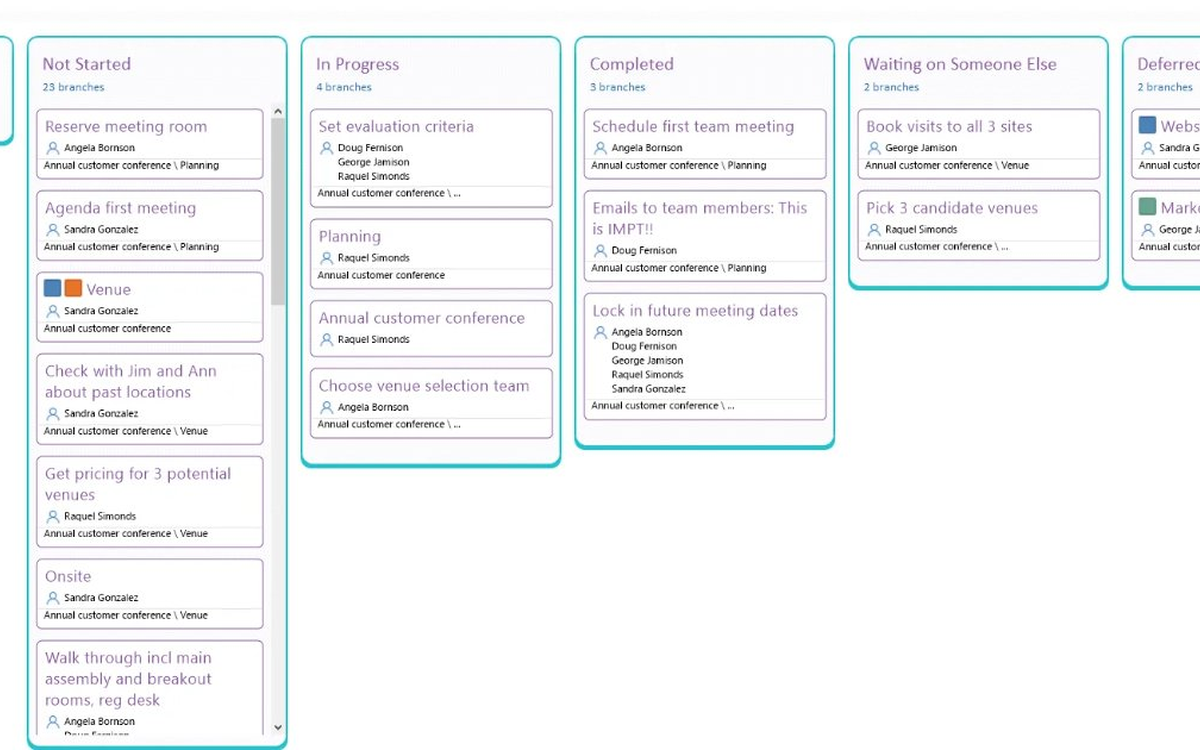
On Desktop this stage surfaces as Sign off, and the map then becomes the work: owners, status and progress on a board.
05 · Define Success
Agree how you will know, before anything is built.
The fifth stage, and the gate to execution. Commit settled what we are aiming at. This stage settles how it will be recognised, in four questions.
Compared with what?
What is true today. If nobody can say, that is a finding.
What will be different?
The intended result, plainly enough that both sides would recognise it.
How will we know?
The evidence, and the same measure as the baseline.
When do we look?
When the evidence is read, and who reads it.
There is no screen for this one, and that is the point. It is an agreement, written down while everyone is still in the room, so the measurement decides whether it worked rather than the person running the project.
And it can send you back
No baseline sends you back to Capture.
An outcome the chosen answer cannot deliver sends you back to Decide.
- We know what we are doing.
- We know who is doing it.
- We know what matters most.
- And we have agreed what success looks like.
Now execution can begin.
When the work begins
Think the map is just for planning?
Once the project is live, the same map becomes its nerve centre: agenda, actions, minutes and live status, from the same information rather than re-keyed into another tool.
And the evidence agreed in Define Success comes back as material for the next round of thinking, not as a stage bolted on at the end.
See how a Project Nerve Centre works →Go deeper
Three ways to explore MindGenius
Success stories
How real businesses use MindGenius to plan, decide and deliver, in their words, not ours.
Read the stories →MindGenius vs MS Project
How a thinking-first tool approaches the work differently from a planning-first tool.
See the comparison →The Structured Thinking Handbook
The full method, including one question taken through all five stages.
Read the handbook →AI that waits to be asked
Facing the empty screen? MindGenius AI can suggest where to start, generate a map from a word or phrase, or flesh out a branch, but only when you ask. It never runs on its own, and you decide what to keep.
And if your organisation doesn't allow AI, there's a build with none in it at all. Same application, and you choose the build:
Standard
The full application with no AI in the build at all. Nothing to enable, nothing to send, nothing to audit.
With AI
The same application with AI available when you ask for it. You decide what to keep.
How MindGenius AI handles your data →
See it on your own work
Download the full application free, and map a real decision you're facing this week. Free 14 day trial. Works offline. No card required, no AI unless you ask for it.
Desktop runs on your own Windows machines and keeps your work as files. MindGenius Online is the same software in a hosted workspace on Microsoft Azure, accessed through a web browser on supported devices, including Windows PCs and Macs, with every project in one view. Same five stages either way.