
Management Review
A management review under ISO 9001 clause 9.3 has to cover a set list of inputs and produce decisions and actions as outputs. This template lays out the full agenda so nothing required is left off, and it goes one step further than a checklist. The actions that come out of the review are set up as tracked tasks with an owner and a date. The map opens on last review's actions and carries this review's decisions forward to the next one, which is exactly where a tick-box review usually falls down.
Desktop downloads a file you open in MindGenius. Online opens the framework so you can look at it first, then add it to your portfolio.
No MindGenius yet? Download Desktop or start an Online trial.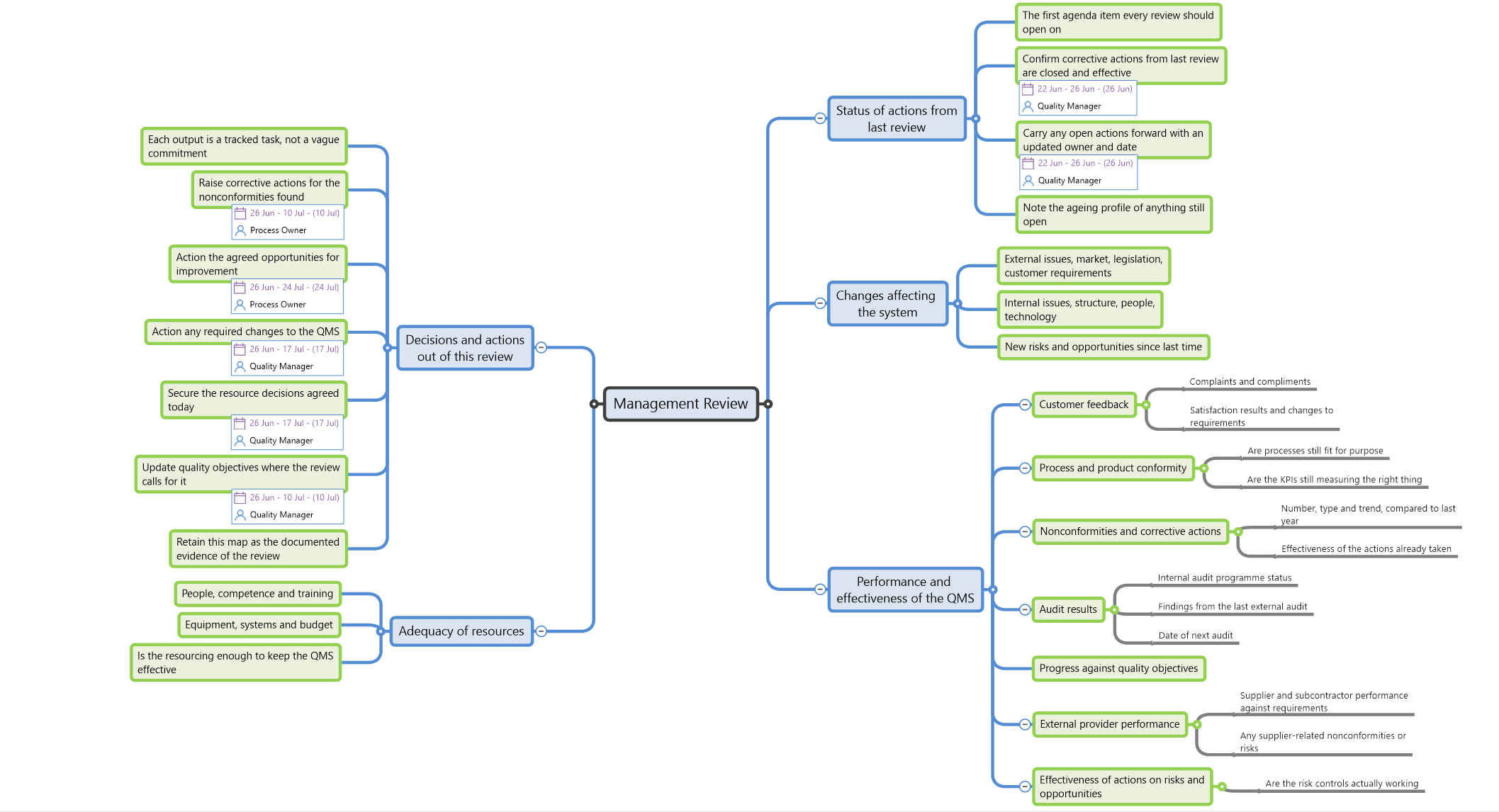
What's in the template
Five branches cover the full clause 9.3 agenda, the required inputs to review and the decisions and actions that come out of it. The items marked with an owner are real MindGenius tasks carrying a person and a date. Keep them, edit them, or delete them in a keystroke.
Status of actions from last review
- Confirm last review's corrective actions are closed and effectiveQuality Manager
- Carry any open actions forward with an updated owner and dateQuality Manager
- Note the ageing profile of anything still open
- The first agenda item every review should open on
Changes affecting the system
- External issues: market, legislation, customer requirements
- Internal issues: structure, people, technology
- New risks and opportunities since last time
Performance and effectiveness of the QMS
- Customer feedback
- Complaints and compliments
- Satisfaction results and changes to requirements
- Process and product conformity
- Are processes still fit for purpose
- Are the KPIs still measuring the right thing
- Nonconformities and corrective actions
- Number, type and trend, compared to last year
- Effectiveness of the actions already taken
- Audit results
- Internal audit programme status
- Findings from the last external audit
- Date of next audit
- Progress against quality objectives
- External provider performance
- Supplier and subcontractor performance against requirements
- Any supplier-related nonconformities or risks
- Effectiveness of actions on risks and opportunities
- Are the risk controls actually working
Adequacy of resources
- People, competence and training
- Equipment, systems and budget
- Is the resourcing enough to keep the QMS effective
Decisions and actions out of this review
- Raise corrective actions for the nonconformities foundProcess Owner
- Action the agreed opportunities for improvementProcess Owner
- Action any required changes to the QMSQuality Manager
- Secure the resource decisions agreed todayQuality Manager
- Update quality objectives where the review calls for itQuality Manager
- Retain this map as the documented evidence of the review
Where a tick-box review falls down
The standard asks the review to produce documented decisions and actions, and the most common audit finding is a list of those actions still open at the next meeting. A static agenda cannot stop that. Here the actions carry owners and dates, sync to Outlook, and you track progress against them on the same map between reviews. Open next year's review on this map and last year's actions are already there, closed or carried forward, which is the evidence an auditor is looking for.