
Project Kick-Off Meeting
A kick-off is not where you read out the plan. It is the one moment everyone who will touch the project is in the room, and the cheapest place they will ever have to disagree. A misalignment found here is a five-minute conversation. The same misalignment found in month three is a re-plan. Most kick-offs perform consensus, everyone nods, the meeting feels productive, and the gaps surface later. This map is built to do the opposite: surface the misalignments while they are still cheap.
Desktop downloads a file you open in MindGenius. Online opens the framework so you can look at it first, then add it to your portfolio.
No MindGenius yet? Download Desktop or start an Online trial.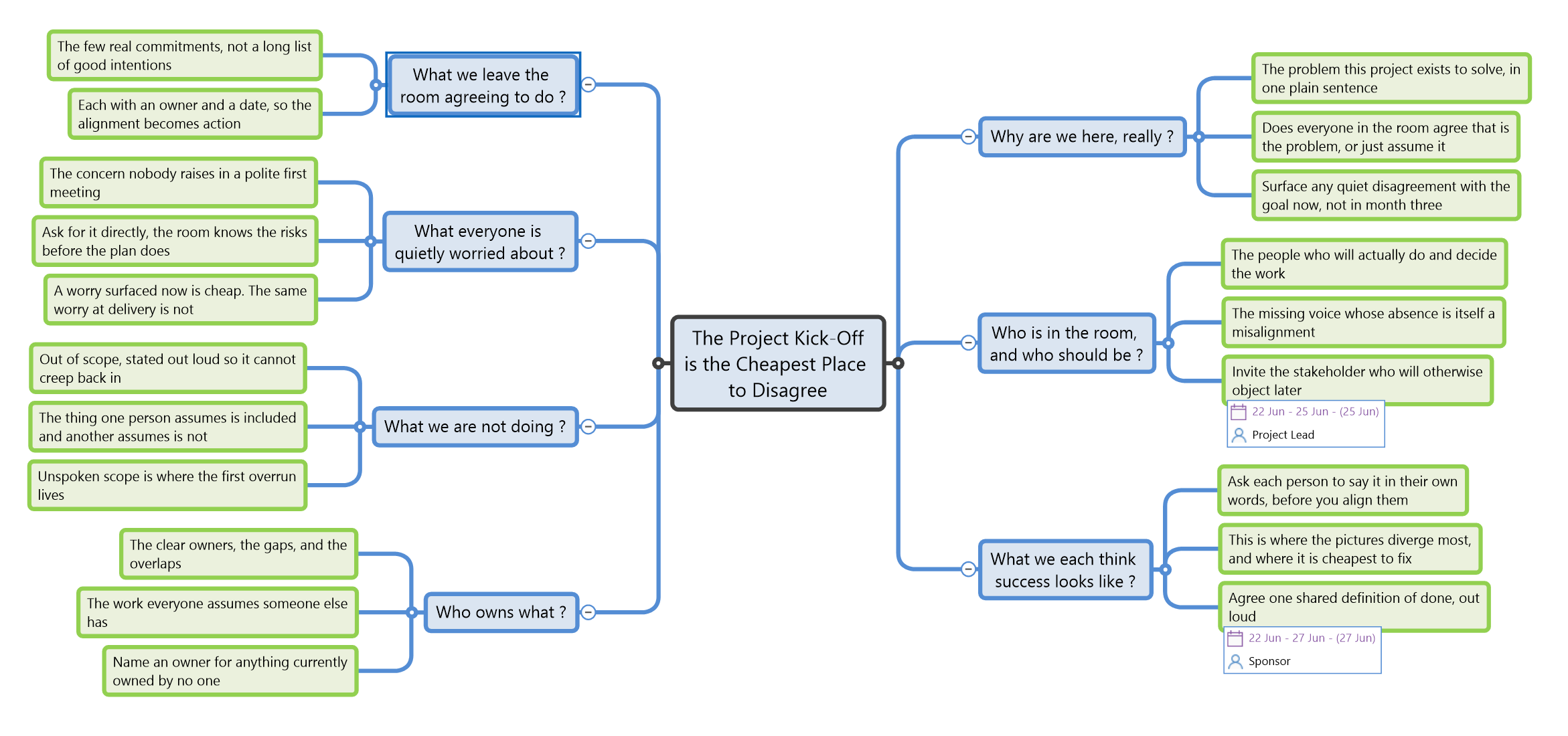
A misalignment found in the kick-off is a conversation. The same misalignment found in month three is a re-plan.
Most kick-offs are built to reach agreement. This one is built to test whether the agreement is real. The danger is never open disagreement in the room. It is the quiet assumption everyone makes differently and no one says out loud. A kick-off succeeds when everyone leaves with the same picture, not when the agenda is covered.
Surface the misalignments while they are still cheap
Every branch turns a normal agenda item into a way to find hidden disagreement. Not cover scope, but find the thing one person assumes is in and another assumes is out. The thinking stays open. Only the two real commitments, inviting the stakeholder who would otherwise object and agreeing one shared definition of done, become tracked tasks.
The kick-off is not where alignment is created. It is where misalignment is discovered.
Why are we here, really
- The problem this project exists to solve, in one plain sentence
- Does everyone in the room agree that is the problem, or just assume it
- Surface any quiet disagreement with the goal now, not in month three
Who is in the room, and who should be
- The people who will actually do and decide the work
- The missing voice whose absence is itself a misalignment
- Invite the stakeholder who will otherwise object laterProject Lead
What we each think success looks like
- Ask each person to say it in their own words, before you align them
- This is where the pictures diverge most, and where it is cheapest to fix
- Agree one shared definition of done, out loudSponsor
Who owns what
- The clear owners, the gaps, and the overlaps
- The work everyone assumes someone else has
- Name an owner for anything currently owned by no one
What we are not doing
- Out of scope, stated out loud so it cannot creep back in
- The thing one person assumes is included and another assumes is not
- Unspoken scope is where the first overrun lives
What everyone is quietly worried about
- The concern nobody raises in a polite first meeting
- Ask for it directly, the room knows the risks before the plan does
- A worry surfaced now is cheap. The same worry at delivery is not
What we leave the room agreeing to do
- The few real commitments, not a long list of good intentions
- Each with an owner and a date, so the alignment becomes action