
SPIN Selling
Situation, Problem, Implication, Pay-off. The sale is won in the implication, not the pitch. Most sellers rush to the solution; the work is making the cost of doing nothing real before you offer the fix. Discovery is rarely linear, so capture it the way it actually arrives: drop each new fact into the right cluster as the conversation turns. Then share the map with the buyer and grow the implication together, because the case they help you build is the case they take to their own decision makers.
The fastest route to "no" is presenting a solution before the buyer believes the problem is worth solving.
Source: Neil Rackham, SPIN Selling (McGraw-Hill, 1988), based on research into more than 35,000 sales calls. The map structure and prompts are MindGenius’s own.
Desktop downloads a file you open in MindGenius. Online opens the framework so you can look at it first, then add it to your portfolio.
No MindGenius yet? Download Desktop or start an Online trial.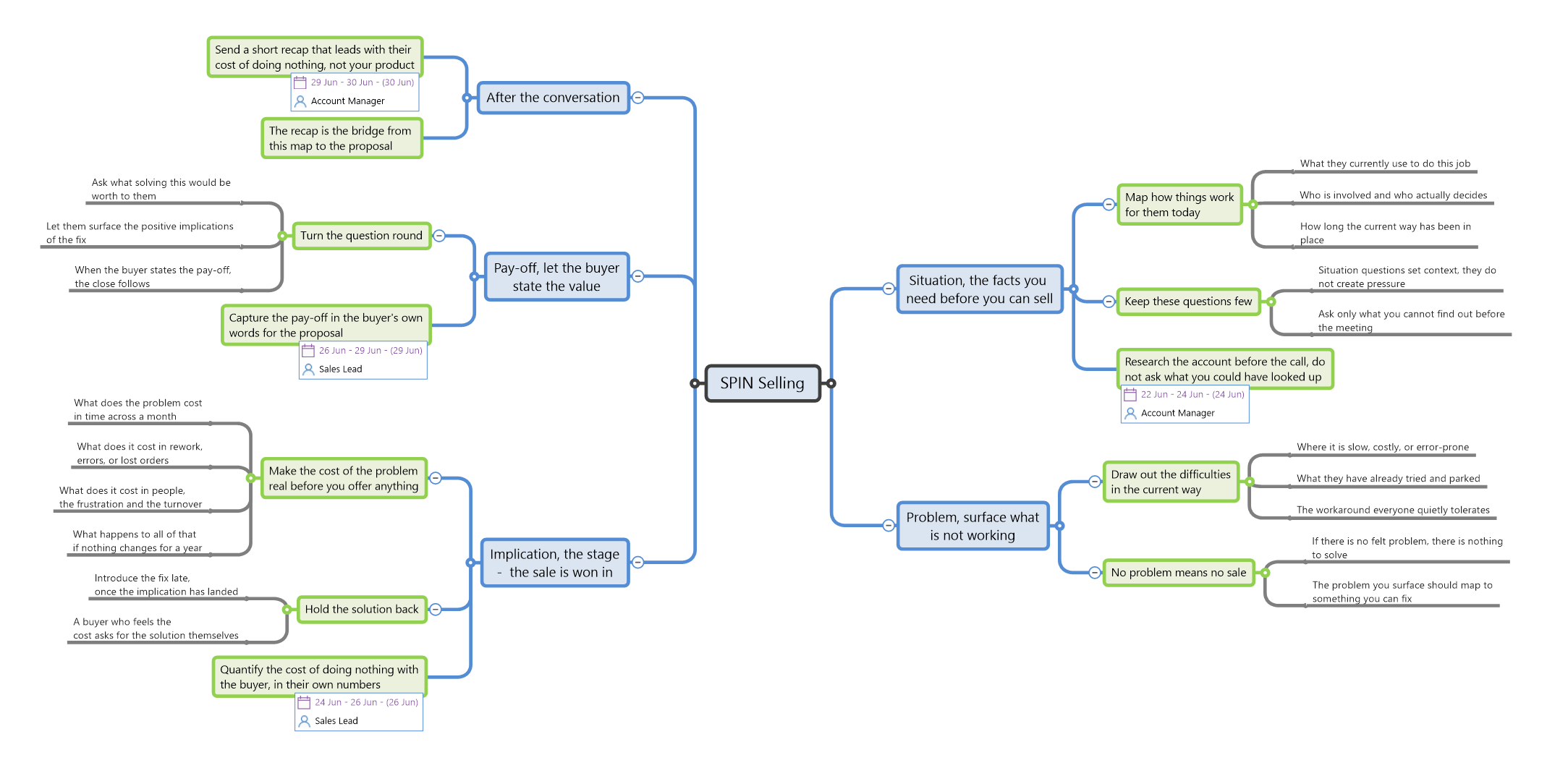
What's in the template
A worked B2B sale, not a blank framework. The four SPIN stages run left to right, and Implication carries the most weight on purpose, because that is the stage the sale is won in. The discovery questions stay open, the way real discovery does. Only the genuine actions become tracked tasks.
Share the map with the buyer and the problem lies bare. You make the fine adjustments together, and the implication grows, because they need it to justify the decision inside their own business.
Situation, the facts you need before you can sell
- Map how things work for them today: what they use, who decides, how long it has been in place
- Keep these questions few, they set context, they do not create pressure
- Research the account before the call, do not ask what you could have looked upAccount Manager
Problem, surface what is not working
- Draw out the difficulties: where it is slow or costly, what they have parked, the workaround everyone tolerates
- No felt problem means no sale, and the problem you surface should map to something you can fix
Implication, the stage the sale is won in
- Make the cost of the problem real before you offer anything: in time across a month, in rework and lost orders, in people, and in what a year of no change adds up to
- Hold the solution back. Introduce the fix late, once the implication has landed
- Quantify the cost of doing nothing with the buyer, in their own numbersSales Lead
Pay-off, let the buyer state the value
- Turn the question round: ask what solving this would be worth to them, and let them surface the upside
- When the buyer states the pay-off, the close follows
- Capture the pay-off in the buyer's own words for the proposalSales Lead
After the conversation
- Send a short recap that leads with their cost of doing nothing, not your productAccount Manager
- The recap is the bridge from this map to the proposal, and it tees up your internal sponsor with the facts to make the case upward